

Slight spoiler alert:
This weekend I was given the choice between seeing the new Tom Hanks movie, or Conclave, about the Roman Catholic Church. I like Tom Hanks, but the film didn’t appeal in the moment, and Conclave looked interesting.
I was trepidatious, as Hollywood boasting an intrigue smacked of controversy and likely some content that I might not love, but my gut said to go for the intrigue, and the film was well made.
I guess for me, being a Christian, Catholicism has some theology that I don’t agree with, but the only thing that rankles is the required celibacy of the priests.
Saint Peter, upon whom Christ build His church, was a married man, and there is no Biblical precedent for priests to be celibate, that I am aware of. There has been so much sin perpetrated by Catholic priests, and I can’t judge, but I wish the priesthood would lift this stricture.
If priests want to marry, that should only make them more stable, and if they are among the few who will not be overcome by lust, then their celibacy should not cause major issues.
Please keep in mind that I am not opposed to Catholicism; there are just differences between my theology and theirs.
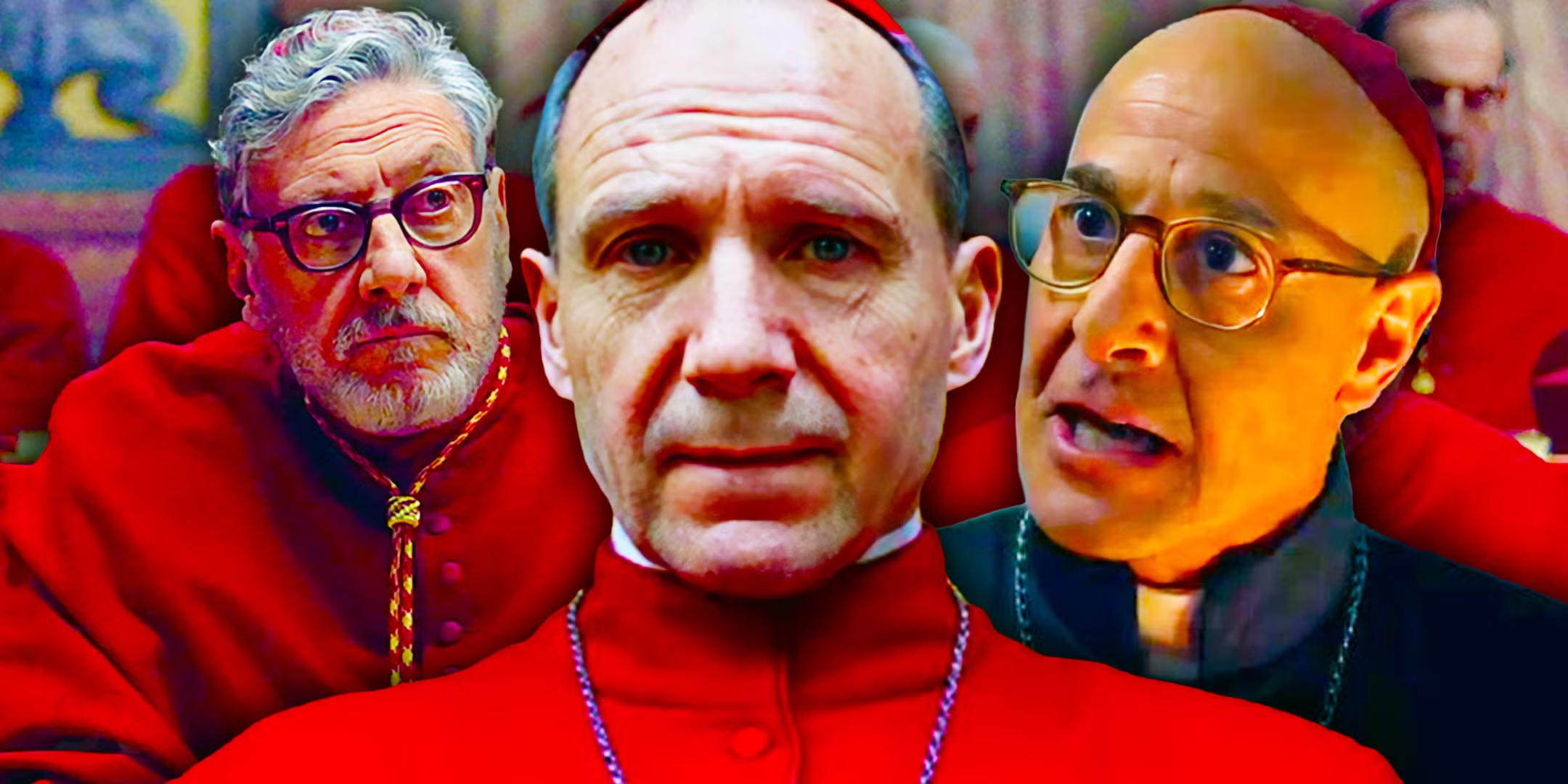
But on to the film. The excellent Ralph Fiennes is Cardinal Lawrence, resigned to his role as a “manager” as relegated by the sitting pope, and is reluctant to seek the papacy when his leader passes away. This reticence is also fueled by Lawrence’ crisis of faith.
Like me, his faith in the Lord is sure, but his faith in himself is shaky. He is, however, the man who seems to have the best grasp of overseeing the complex and challenging process of the conclave.
One of my favorite character actors, Stanley Tucci, plays the liberal Cardinal Bellini, who supports homosexuals and women in the clergy. This is contrary to what I believe; not that I believe in exclusion or prejudice, rather as I feel the scriptures show that such things are not intended. Tucci is also well cast, and with subtle nuances, portrays Bellini with elan.
John Lithgow is Cardinal Tremblay, who co-leads the field of electors as the film starts out. The seasoned Lithgow is very capable if marginal, while Tucci and Fiennes have a little more screentime.
Sergio Castellitto does well as Cardinal Tedesco, the conservative elector whom the main protagonists oppose. I somewhat sympathized with his traditional views while strongly eschewing his racist and other prejudicial vitriol.
Lucian Msamati is quite skillful as Cardinal Adeyemi, an elector from Nigeria, who deals with some difficulty during his candidacy.
Carlos Diehz puts in a significant turn as Cardinal Benitez, an unexpected elector from Kabul, who seems to transcend some of the opposing views of the other participating Cardinals.
Finally, Isabella Rosellini has some very key moments as Sister Agnes, a force to be reckoned with despite her marginalized role in the male dominated process.

There are some very good moments in Conclave. I am not sure how I feel about the story or the denouement, but if you are wanting a Hollywood view into the machinations of the papacy, Conclave might be for you.
(based on the book by Robert Harris)
 Positive Press
Leave a comment